Kanye West's Production Evolution
Kanye West's Production Evolution
Kanye West is arguably one of the most influential producers of the 21st century. While his persona often overshadows his technical brilliance, a close examination of his discography reveals a masterful evolution from soul-sampled boom-bap to boundary-pushing electronic abstraction.
The Soulful Beginnings
Kanye's early signature was the "chipmunk soul" sound—pitching up classic soul records until the vocals sounded high-pitched and frantic. He didn't invent this technique, but he popularized it on a massive scale.
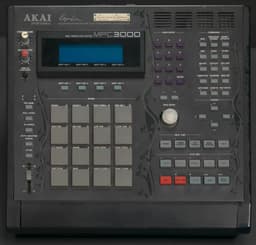
His work on Jay-Z's The Blueprint and his own debut, The College Dropout, relied heavily on the Akai MPC2000XL to chop and reassemble these samples. Tracks like "Through the Wire" and "Jesus Walks" demonstrated his ability to make obscure samples sound like stadium anthems while grounding them in heartfelt, relatable narratives.
The Synthesizer Shift
With Graduation (2007) and particularly 808s & Heartbreak (2008), West largely abandoned traditional soul samples. Instead, he embraced the Roland TR-808 drum machine and cold, atmospheric synthesizers.
This era was defined by alienation and melancholy, replacing warm vinyl crackle with auto-tuned isolation. This hard pivot laid the groundwork for an entire generation of emotive, melody-driven hip-hop artists like Drake, Kid Cudi, and Travis Scott.
Industrial Minimalism
The release of Yeezus in 2013 marked another severe left turn. Collaborating with producers like Daft Punk, Arca, and Rick Rubin, West stripped his sound down to abrasive, industrial minimalism.
The beats were distorted, the drum programming was chaotic, and the samples—when used—were twisted into unrecognizable wails. It was a polarizing record, but it pushed mainstream hip-hop into avant-garde territory, proving that West's true genius lies in his constant refusal to remain musically stagnant.